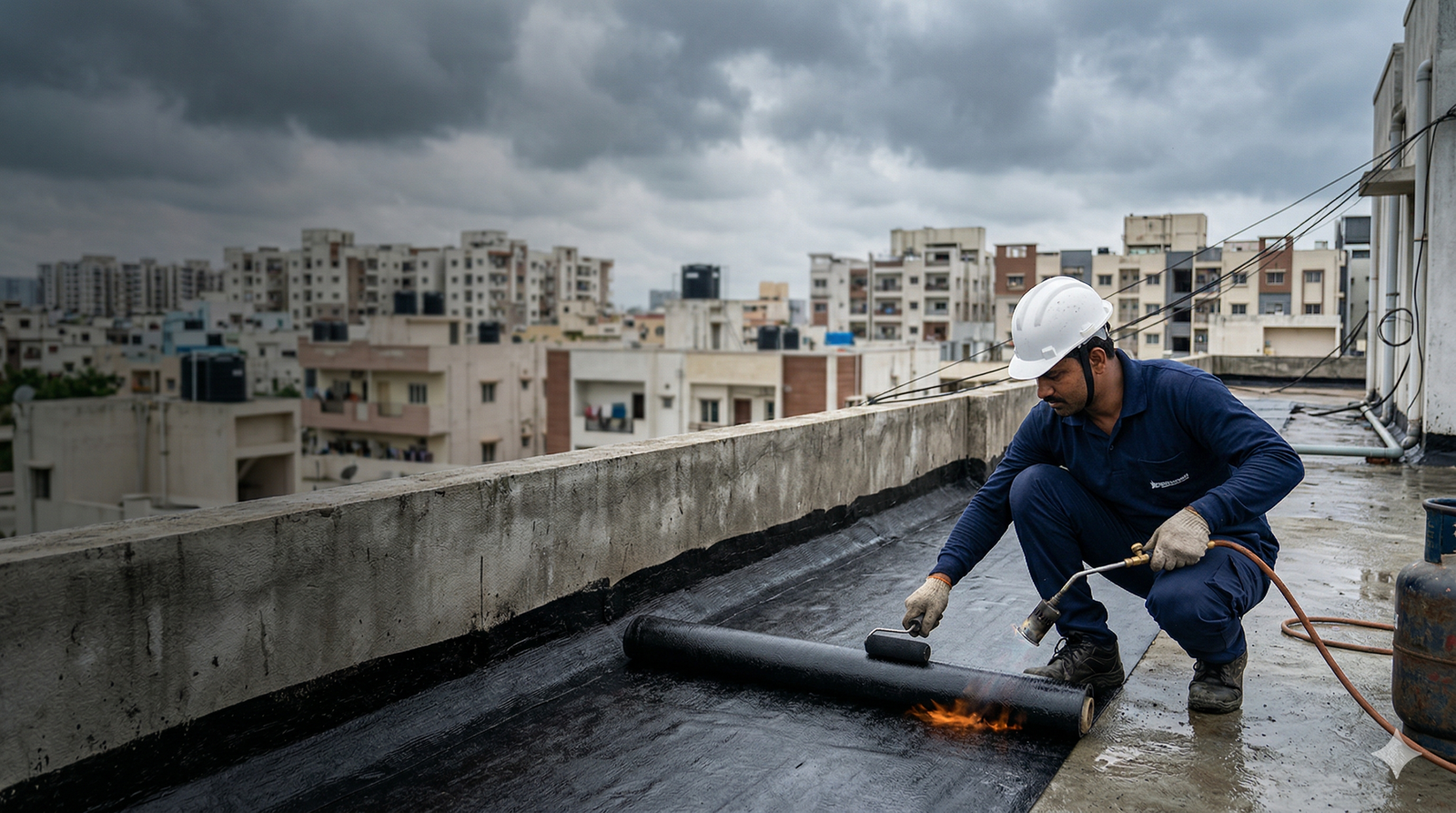
Terrace water leakage in Hyderabad is one of the most common problems faced by homeowners. Due to heavy rains and heat, terrace leakage can quickly lead to serious structural damage if not identified early is one of the most common and costly problems faced by homeowners and building owners in Hyderabad. What starts as a small damp patch on your ceiling can quickly escalate into structural damage, mould growth, and expensive repairs — if left undetected. The monsoon seasons in Hyderabad are particularly unforgiving, and a terrace that isn’t properly waterproofed becomes a liability every time the rains arrive.
The good news? Most terrace leakage issues give you early warning signs — you just need to know where to look. This guide walks you through exactly how to identify water leakage in your terrace at the earliest stage, before it causes serious and irreversible damage to your home or building.
Why Early Detection of Terrace Leakage Matters
Water damage follows a pattern: it starts invisibly, progresses slowly, and then suddenly causes major damage. By the time you notice a water stain on your ceiling or peeling paint on your walls, water has likely been seeping through your terrace for weeks or even months.
In Hyderabad, the combination of intense summer heat, heavy monsoon rains, and temperature fluctuations puts terraces under constant stress. Thermal expansion and contraction create hairline cracks over time. Once water enters through these cracks, it travels through the concrete and finds its way to the interior of your building.
Ignoring even minor signs can lead to: weakened RCC slabs, rusting of reinforcement bars, damaged false ceilings, mould and health hazards for occupants, and significantly higher repair costs. A problem that costs ₹15,000–₹25,000 to fix today can escalate to ₹1,00,000+ if ignored for a year.

7 Early Warning Signs of Terrace Water Leakage
Here are the most reliable indicators that your terrace may already be leaking or is at risk of leaking soon.
1. Damp Patches or Stains on the Ceiling Below the Terrace
The most obvious sign — yellowish-brown stains or wet patches on your top-floor ceiling directly indicate water penetration from above. These patches often appear or grow larger after rain. Don’t assume it’s a pipeline issue; if the stain aligns with the terrace area above, it is almost certainly terrace leakage. Check if the patch is consistently damp even during dry weather, which indicates retained moisture in the slab.
2. Visible Cracks on the Terrace Surface
Walk across your terrace and look carefully for hairline cracks, spiderweb cracks, or wider fractures in the screed (the cement layer on top). Hairline cracks may seem harmless, but they are primary entry points for water. In Hyderabad’s climate, these cracks expand during summer heat and contract during cooler months, gradually widening over years. Any crack deeper than the surface screed needs immediate professional attention.
3. Water Pooling or Poor Drainage on the Terrace
After rain, observe how water drains off your terrace. If water pools in certain areas and takes more than 30–45 minutes to drain completely, it signals drainage failure or surface irregularities. Standing water increases hydrostatic pressure on the slab and accelerates water ingress. Check that drainage outlets (drains/pipes) are clear and that the terrace has the proper slope (minimum 1:100 gradient toward the drain).
4. Peeling Paint or Flaking Plaster on Top-Floor Walls
When water seeps through the terrace and into the slab, it doesn’t just travel downward — it also moves laterally into the walls. If the paint on your top-floor interior walls is peeling, bubbling, or showing white salt deposits (efflorescence), moisture is migrating from the slab. This is especially common near parapet walls and the edges where the terrace meets the wall junction.
5. Efflorescence (White Salt Deposits) on Terrace or Walls
Efflorescence appears as white, chalky deposits on concrete or brick surfaces. It occurs when water moves through a structure, dissolves salts, and deposits them on the surface as it evaporates. If you see these white deposits on your terrace floor, parapet wall, or the walls just below the terrace level, it is a clear indicator of active water movement through the structure — a sign that waterproofing has failed or never been applied.
6. Musty Smell or Mould Growth Inside the Building
If rooms directly below the terrace have a persistent musty or damp smell — especially after rain — it strongly suggests moisture is entering from above. Mould and mildew thrive in damp conditions and can develop on walls and ceilings within weeks of sustained moisture exposure. Beyond being aesthetically damaging, mould poses serious respiratory health risks for building occupants. If you see black, green, or brown patches on your ceiling or upper walls, act immediately.
7. Rusting or Staining Around Metal Fixtures on the Terrace
Check the base of parapet walls, metal railing posts, water tank pedestals, and any embedded metal fixtures on the terrace. Rust stains running down from metal anchor points into the concrete indicate water is penetrating deep enough to reach the reinforcement. This is a serious structural warning sign. Once the steel rebar inside a slab begins to corrode, it expands and causes spalling (breaking away) of the surrounding concrete — a condition that requires urgent structural repair.
How to Do a Basic Terrace Leakage Inspection Yourself
You don’t need to be a waterproofing expert to do a preliminary inspection. Here’s a simple process any homeowner in Hyderabad can follow:
-
- Inspect on a dry day after recent rain — this is when moisture traces are most visible.
-
- Walk the entire terrace surface looking for cracks, blisters, or surface deterioration.
-
- Check all drain outlets and ensure they’re not blocked with debris or leaves.
-
- Look at the parapet wall base and edges where the waterproofing membrane is most likely to have failed.
-
- Go inside and check the top-floor ceiling and walls for stains, damp spots, or paint failure.
-
- Note any areas where the terrace surface has been patched or repaired previously — these are common failure points.
-
- If you have a water tank on the terrace, check for overflow or leakage around its base.
When to Call a Professional Waterproofing Expert in Hyderabad
A DIY inspection can help you spot the problem early — but fixing terrace leakage is never a DIY job. Here’s when you must contact a professional waterproofing contractor:
-
- You’ve spotted any of the 7 warning signs mentioned above
-
- Your terrace is more than 5 years old and has never been waterproofed or re-waterproofed
-
- You see cracks wider than a hairline — especially near drains, corners, or construction joints
-
- The building is going through renovation and the terrace is being re-tiled or re-screed
-
- You’ve had repeated repairs that failed within 1–2 seasons
A qualified waterproofing engineer will conduct a thorough site assessment, identify the exact source of water ingress, and recommend the right waterproofing system — whether that’s a cementitious coating, liquid-applied membrane, polyurethane system, or crack bridging treatment. In Hyderabad, where buildings face extreme weather stress year-round, professional-grade waterproofing with a 5–10 year warranty is always the right investment.
Preventive Measures to Avoid Terrace Leakage
Prevention is always cheaper than cure. Here are proactive steps to keep your terrace watertight:
-
- Get professional terrace waterproofing done before your building’s first monsoon season.
-
- Re-waterproof your terrace every 5–8 years depending on the system used.
-
- Clean terrace drains before every monsoon season (typically May–June in Hyderabad).
-
- Avoid placing heavy planters directly on the terrace surface — use elevated stands.
-
- Don’t allow construction or renovation debris to block drainage outlets.
-
- Inspect the terrace annually, ideally in April before the monsoon, and after any major rain event.
FAQs About Terrace Leakage in Hyderabad
Q: How do I know if my terrace leakage is serious?
A: If you see damp ceiling patches, mould, peeling paint, or structural staining, the leakage has already penetrated the slab and is causing active damage. This requires immediate professional attention.
Q: Can I fix terrace leakage without breaking tiles?
A: Yes. Modern terrace waterproofing solutions, like those offered by KSR Waterproofing Engineers, are designed to be applied without breaking existing tiles or screed. Advanced liquid-applied membranes and crack bridging coatings can be applied over the existing surface, saving time and disruption.
Q: What is the cost of terrace waterproofing in Hyderabad?
A: Costs depend on the terrace area, the waterproofing system, and the extent of existing damage. Typically, professional terrace waterproofing in Hyderabad ranges from ₹80 to ₹250 per sq. ft. depending on the method used. Contact KSR Waterproofing Engineers for a free site assessment and quote.
Q: How long does terrace waterproofing last?
A: A professionally applied terrace waterproofing system typically lasts 5–10 years, depending on the product used, quality of application, and maintenance. KSR Waterproofing Engineers provides waterproofing solutions with a 5–10 year warranty.
Don’t Wait for the Damage to Get Worse
Terrace leakage never fixes itself. What appears to be a minor inconvenience today becomes a serious structural problem within a few monsoon cycles. The earlier you identify the signs and act, the lower your repair costs and the better the long-term health of your building.
KSR Waterproofing Engineers is a trusted terrace waterproofing specialist based in Hyderabad, with 15+ years of experience protecting residential, commercial, and industrial structures across the city. We offer free site inspections, use certified materials from leading brands, and back our work with a 5–10 year warranty.
If you have noticed any of the warning signs mentioned above — or simply want to get ahead of the problem before this monsoon season — call KSR Waterproofing Engineers today at +91 91215 64407 or visit ksrwaterproofingengineers.com for a free consultation.